
HEAVY TRUCK COLLISION REPAIR
How to Minimize Semi-Truck Downtime After a Collision
Some trucks roll into our shop needing nothing more than a panel and a fresh coat of paint. Others arrive after a serious collision, and the only question the owner really has is the one that matters most: how fast can I get back on the road?
We understand why. For a working Class 8 truck, downtime isn’t an inconvenience. It’s lost loads, missed delivery windows, an idle driver, and revenue that doesn’t come back.
Backed by more than 30 years of collision repair experience, we’ve learned that the trucks back in service fastest usually aren’t the ones with the least damage. They’re the ones whose owners moved quickly and started the process the right way. Below is what we tell every fleet owner and owner-operator who calls us after a collision.
Why Truck Downtime Costs More Than the Repair Itself
From the outside, a collision looks like a repair bill. For a commercial operator, the repair is often the smaller cost.
Every day a truck sits adds up: a missed load, a driver still on payroll, a customer waiting on freight, and in some cases penalties for late delivery. According to the Federal Motor Carrier Safety Administration, keeping commercial vehicles in safe operating condition is a legal requirement, not just a business one — so a rushed or incomplete repair can cost you twice. That’s why the goal isn’t just fast. It’s fast and done right, so the truck doesn’t come back off the road a month later.
The 4 Steps That Get Your Truck Back on the Road Faster
Every collision is different, but the path to minimum downtime follows the same handful of steps. Move through them in order and you avoid the delays we see most often.
Step 1: Document the Damage Before the Truck Moves
Before anything is towed or driven, get clear photos of all the damage from several angles, including the surrounding scene and any other vehicles involved. This isn’t busywork. Solid documentation keeps your insurance claim moving and prevents the disputes that quietly stall repairs for days.
Step 2: Get It to a Shop That Actually Works on Class 8 Trucks
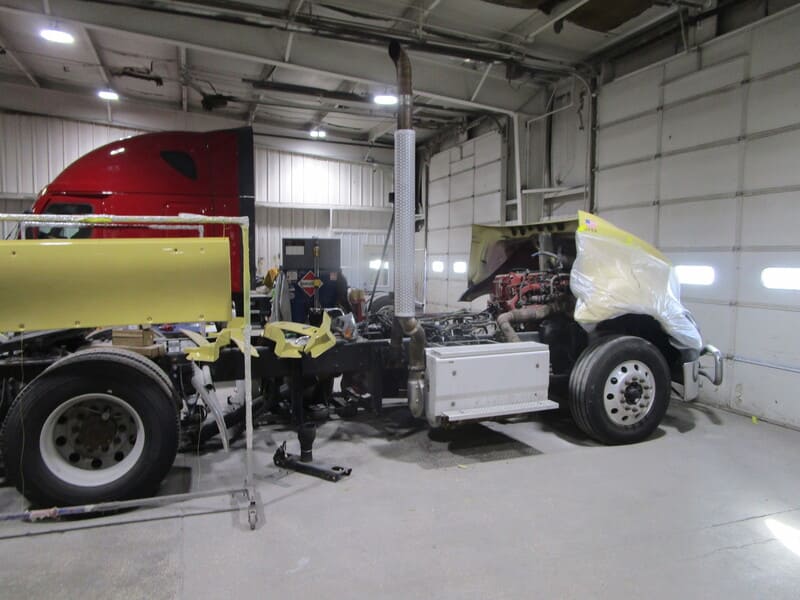
Not every body shop is built for commercial trucks. Frame work, ride height, air systems, and the sheer size of a Class 8 vehicle take the right bays, equipment, and experience. Send the truck to a car-focused shop and you risk a second tow, sublet frame work, and a half-finished job — every one of which adds days. Choosing a dedicated heavy truck shop up front means a realistic estimate and parts ordered sooner. In Central Iowa, that’s exactly what we do — Collision Solutions is a dedicated heavy truck collision shop, so your Class 8 truck gets the right bay, equipment, and experience from day one.
Step 3: Start the Insurance Claim Immediately
Insurance approval is one of the biggest hidden causes of downtime. The repair can’t fully proceed until the claim clears. A shop experienced with commercial claims can work directly with your adjuster and provide a complete estimate up front, cutting the back-and-forth that drags timelines out. Ask whether the shop is insurance-approved and how they handle adjuster communication; the answer tells you how fast your truck will really move.
Step 4: Separate Cosmetic Damage From Structural Damage Early
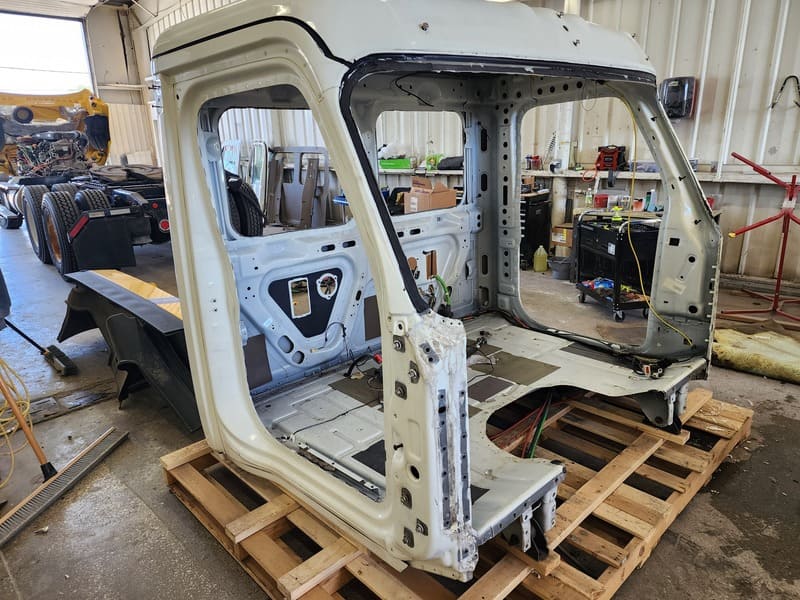
A truck that looks rough may be structurally fine. A truck that looks fine may have frame or alignment damage that has to be corrected before it’s safe and legal to run. A good shop tells you which category you’re in early, so you can plan loads, routes, and driver scheduling around a realistic timeline instead of a hopeful one.
How to Keep Your Business Moving While the Truck Is in the Shop
Downtime feels longer and costs more when you’re guessing. While the truck is being repaired, communicate with customers early about any affected deliveries, consider a temporary replacement tractor for time-sensitive freight, and stay in regular contact with the shop so you know the moment it’s ready.
Why This Is Personal for Us
Collision Solutions was founded on values learned on a Nebraska dairy farm, and we know what it means when the equipment your livelihood depends on suddenly stops working.
A semi sitting in our shop isn’t just a repair job. It’s someone’s business on hold. Their income. Their word to a customer. That’s why we focus on honest estimates, regular updates, and quality work we stand behind, so you’re never left wondering where things stand.
Semi-Truck Collision Repair FAQs
How long does semi-truck collision repair take?
It depends on the extent of the damage, parts availability, and insurance approval. Minor work can be quick, while major frame or structural repairs take longer. The fastest way to get a realistic timeline is an in-person estimate.
Will insurance cover my commercial truck collision repair?
Most commercial and collision policies do. We work directly with insurance companies and adjusters to keep the claim — and your truck — moving.
Can you repair frame damage on a Class 8 truck?
We handle light pulling and structural reinforcement in house. Full frame machine work is sublet to a specialist, because frame repair has to be done correctly for a truck to return to safe, legal operating condition.
Do you work on whole fleets, not just single trucks?
We do. We serve fleets, owner-operators, construction companies, and municipalities across Central Iowa.
Need Heavy Truck Collision Repair in Des Moines or Central Iowa?
Whether your truck has minor body damage or major collision damage, our team is here to get you back on the road quickly and safely. We offer free estimates and insurance-approved repairs for Class 8 trucks, fleets, and owner-operators.
If your truck has damage and you’re not sure where to start, get in touch with our team or call us directly at (515) 412-1722. Collision Solutions Truck Repair proudly serves fleets and owner-operators throughout Des Moines and Central Iowa.